
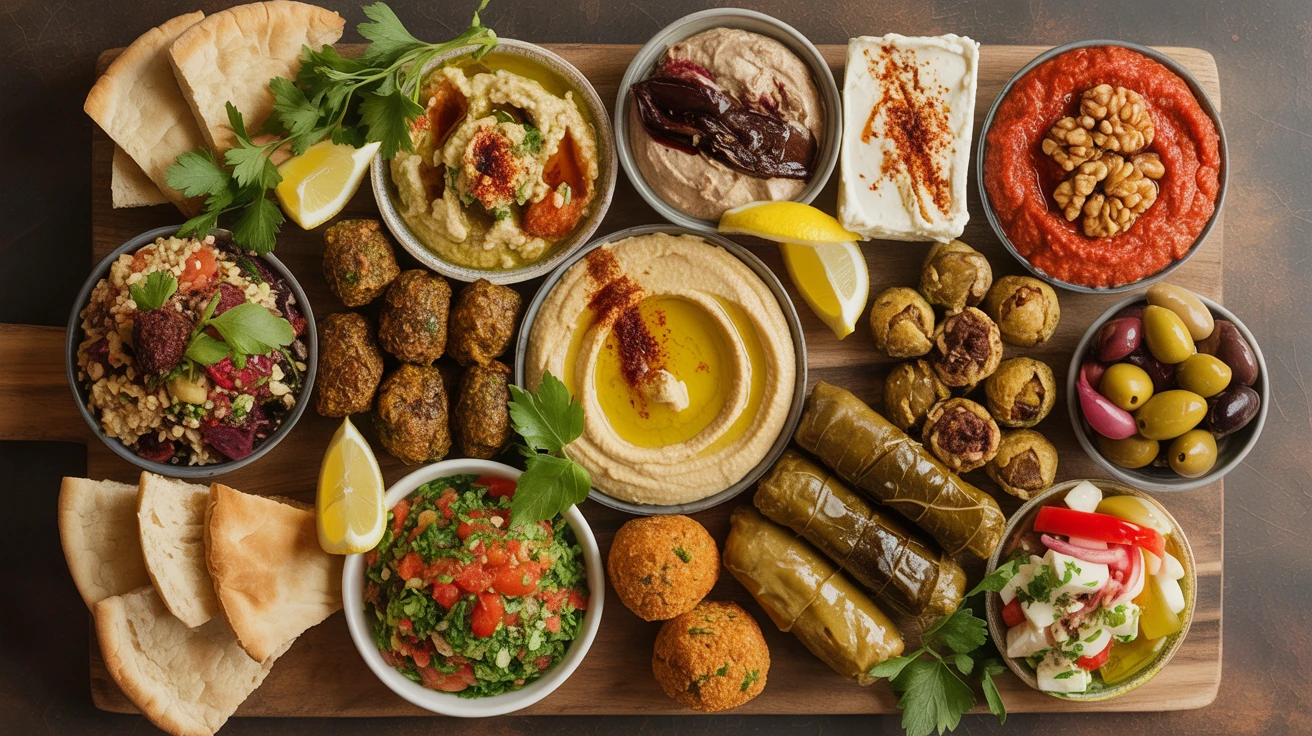
Mediterranean Food Glossary
Master the terms, pronunciations, and cultural context behind our authentic Mediterranean and Persian cuisine
New to Persian and Mediterranean food? This glossary helps you learn the terms and how to say them. Each entry shows you what the dish is, where it comes from, and how we make it at Carnys. Use this guide to order with ease and enjoy your meal even more.
How to Use This Guide
- Click any term to see how to say it and what it means
- Check the "At Carnys" notes to learn how we make each dish
- Follow menu links to find the dish on our full menu
- Show this to your server if you need help ordering
Culinary Terms by Category
Appetizers & Mezze
Mezze
Pronunciation: MEH-zeh
A selection of small dishes served as appetizers in Mediterranean and Middle Eastern cuisine
Origin: From Persian "maza" meaning taste or snack
At Carnys: Our mezze platter features hummus, baba ganoush, labneh, and warm pita
Hummus
Pronunciation: HOOM-us
A creamy dip made from chickpeas, tahini, lemon juice, and garlic
Origin: Ancient Levantine dish, popular across the Mediterranean
At Carnys: House-made daily with extra virgin olive oil and paprika
Baba Ganoush
Pronunciation: BAH-bah gha-NOOSH
Smoky eggplant dip blended with tahini, garlic, and lemon
Origin: Levantine dish meaning "spoiled father" or "pampered papa"
At Carnys: Roasted over open flame for authentic smoky flavor
Labneh
Pronunciation: LAB-neh
Strained yogurt cheese with a thick, creamy texture
Origin: Traditional Middle Eastern dairy product
At Carnys: Served with za'atar, olive oil, and fresh herbs
Falafel
Pronunciation: fuh-LAH-fel
Deep-fried balls made from ground chickpeas or fava beans with herbs and spices
Origin: Ancient Egyptian dish, now popular throughout Middle East
At Carnys: Crispy golden exterior, fluffy herb-packed interior
Dolma
Pronunciation: DOHL-mah
Grape leaves stuffed with rice, herbs, and sometimes meat
Origin: Ottoman Turkish, meaning "stuffed thing"
At Carnys: Hand-rolled with aromatic rice and Mediterranean herbs
Main Dishes & Proteins
Kebab/Kabob
Pronunciation: keh-BOB
Grilled meat (or vegetables) on skewers, often marinated
Origin: Persian origin, spread throughout Middle East and Mediterranean
At Carnys: We specialize in koobideh, joojeh, and shish kabobs
Koobideh
Pronunciation: koo-bee-DEH
Ground meat (beef or lamb) kabob seasoned with onions and spices
Origin: Classic Persian kebab, "koobideh" means "pounded" or "slammed"
At Carnys: Our signature dish - hand-ground beef and lamb on saffron rice
Joojeh Kabob
Pronunciation: joo-JEH kah-BOB
Saffron-marinated chicken kabob, tender and aromatic
Origin: Persian chicken kebab, "joojeh" means "young chicken"
At Carnys: Marinated 24 hours in saffron, yogurt, and lemon
Ghormeh Sabzi
Pronunciation: gor-MEH sab-ZEE
Persian herb stew with kidney beans, dried limes, and tender lamb
Origin: Iran's national dish, "ghormeh" means braised, "sabzi" means herbs
At Carnys: Slow-cooked with fenugreek, parsley, cilantro, and Persian limes
Shawarma
Pronunciation: shuh-WAR-mah
Thinly sliced meat cooked on a vertical rotisserie
Origin: Levantine Arabic, from Turkish "çevirme" meaning "turning"
At Carnys: Available as a wrap with tahini sauce and pickled vegetables
Rice & Grains
Tahdig
Pronunciation: tah-DEEG
Crispy golden rice crust from the bottom of the pot
Origin: Persian delicacy, "tah" means bottom, "dig" means pot
At Carnys: The most prized part of Persian rice - crispy, golden, and buttery
Zereshk
Pronunciation: zeh-RESH-k
Dried barberries, small tart red berries
Origin: Persian ingredient, adds sweet-tart flavor to rice dishes
At Carnys: Featured in our Zereshk Polo - saffron rice with barberries
Polo
Pronunciation: POH-low
Persian-style steamed rice, often mixed with ingredients
Origin: Persian word for rice pilaf
At Carnys: Fluffy basmati rice steamed with butter and saffron
Bulgur
Pronunciation: BULL-gur
Parboiled cracked wheat, common in Middle Eastern cuisine
Origin: Turkish origin, key ingredient in tabbouleh and kibbeh
At Carnys: Used in our authentic kibbeh and tabbouleh salads
Ingredients & Spices
Tahini
Pronunciation: tah-HEE-nee
Paste made from ground sesame seeds
Origin: Arabic word meaning "to grind", essential in hummus and baba ganoush
At Carnys: We import premium tahini for our mezze
Za'atar
Pronunciation: ZAH-tar
Middle Eastern spice blend of dried thyme, oregano, sumac, and sesame seeds
Origin: Ancient Levantine herb mixture
At Carnys: Sprinkled on labneh, flatbreads, and salads
Sumac
Pronunciation: SOO-mak
Tangy, lemony spice made from dried sumac berries
Origin: Mediterranean and Middle Eastern seasoning
At Carnys: Adds tartness to salads and grilled meats
Saffron
Pronunciation: SAF-ron
The world's most expensive spice, from crocus flower stigmas
Origin: Persian cultivation, prized for golden color and delicate flavor
At Carnys: Essential in our Persian rice and joojeh marinade
Harissa
Pronunciation: hah-REE-sah
Hot chili pepper paste with garlic, caraway, and olive oil
Origin: North African (Tunisian) condiment
At Carnys: Available as a spicy accompaniment to kebabs
Pomegranate Molasses
Pronunciation: POM-eh-gran-it moh-LASS-ez
Thick, tangy syrup made from reduced pomegranate juice
Origin: Persian and Levantine ingredient for sweet-tart flavor
At Carnys: Used in marinades and salad dressings
Desserts & Sweets
Baklava
Pronunciation: bah-klah-VAH
Layered phyllo pastry with nuts and honey syrup
Origin: Ottoman Turkish, popular across Mediterranean and Middle East
At Carnys: Made with pistachios, walnuts, and rose water honey
Kunafa
Pronunciation: koo-NAH-fah
Shredded phyllo pastry dessert with cheese center and sweet syrup
Origin: Levantine dessert, particularly popular in Palestine and Jordan
At Carnys: Served warm with orange blossom syrup
Halva
Pronunciation: HAHL-vah
Dense, sweet confection made from tahini or semolina
Origin: Arabic word meaning "sweet", variations across Mediterranean
At Carnys: Offered as a traditional after-dinner treat
Beverages & Hookah
Hookah/Shisha
Pronunciation: HOO-kah / SHEE-shah
Water pipe for smoking flavored tobacco
Origin: Persian "hookah" or Arabic "shisha" (glass), ancient social tradition
At Carnys: We offer 40+ premium hookah flavors and nicotine-free options
Turkish Coffee
Pronunciation: TUR-kish KAHF-fee
Finely ground coffee boiled with sugar, served unfiltered
Origin: Ottoman Turkish tradition, "kahve" from Arabic qahwa
At Carnys: Prepared traditionally in a cezve with cardamom
Kava
Pronunciation: KAH-vah
Pacific Island root beverage known for relaxation properties
Origin: Polynesian ceremonial drink, increasingly popular in wellness culture
At Carnys: Featured in our Botanical Bar with traditional shell service
Doogh
Pronunciation: DOOG
Savory yogurt drink with mint and salt
Origin: Persian refreshing beverage, similar to ayran
At Carnys: Traditional accompaniment to Persian meals
Common Questions About Mediterranean Cuisine
What is the difference between mezze and appetizers?
What is the difference between mezze and appetizers?
Mezze means small dishes for sharing. You get 3 to 6 plates at once for the whole table. This is different from Western apps where each person gets their own. Mezze makes eating more social and fun.
How do you pronounce tahdig?
How do you pronounce tahdig?
Say it like "tah-DEEG" with stress on the second part. It means "bottom of the pot" in Persian. Tahdig is the crispy golden rice layer that forms at the pot bottom. Many people think it is the best part of the meal.
What is the correct pronunciation of kebab?
What is the correct pronunciation of kebab?
Kebab sounds like "keh-BOB" with stress on the second part. You may also see it spelled as "kabob" which is common in Persian and American places. Both spellings mean the same grilled meat dish.
Is tahini the same as hummus?
Is tahini the same as hummus?
No, they are different. Tahini is a paste made from sesame seeds. It goes into hummus as one part. Hummus is the full dip made with chickpeas, tahini, lemon, and garlic. Think of tahini like peanut butter as just one item in a bigger recipe.
What does zaatar taste like?
What does zaatar taste like?
Zaatar tastes earthy with a tangy hint and slight nutty notes. It mixes dried thyme, sumac (which is tangy like lemon), and sesame seeds. People use it on bread, yogurt dips, salads, and grilled meats.
What is the difference between Persian and Mediterranean food?
What is the difference between Persian and Mediterranean food?
Persian food comes from Iran and is one type of Mediterranean food. It uses lots of rice, saffron, and dried fruits. Mediterranean is a bigger term that covers Greek, Turkish, Lebanese, and Persian styles. All share fresh herbs, olive oil, and grilled meats but each has its own twist.
Pro Tips for Ordering
Start with Mezze
Order 2-3 mezze dishes to share - it's the traditional way to begin a Mediterranean meal and helps you sample multiple flavors.
Ask for Tahdig
Don't be shy! Tahdig (crispy rice) is highly prized in Persian cuisine. Ask your server if it's available - it's a special treat.
Try a Mixed Grill
Can't decide? Our mixed grill platter lets you sample koobideh, joojeh, and lamb chops all on one plate.
Pair with Hookah
After dinner, enjoy a traditional hookah session. Mint or double apple flavors complement Mediterranean meals perfectly.
Ready to Experience Authentic Mediterranean Cuisine?
Now that you know the terminology, come taste the real thing at Carnys