Culture

The Ancient Roots of Persian Cuisine: A 2,500-Year Journey from Persia to Your Plate

Explore the fascinating 2,500-year history of Persian cuisine from ancient Persia to modern Encino. Discover how royal courts and trade routes shaped the flavors we enjoy today.

December 23, 2025UpdatedDecember 24, 202517 min read3,231 words
Chef Ali Rezaei

Executive Chef & Co-Owner

Share:
Share:
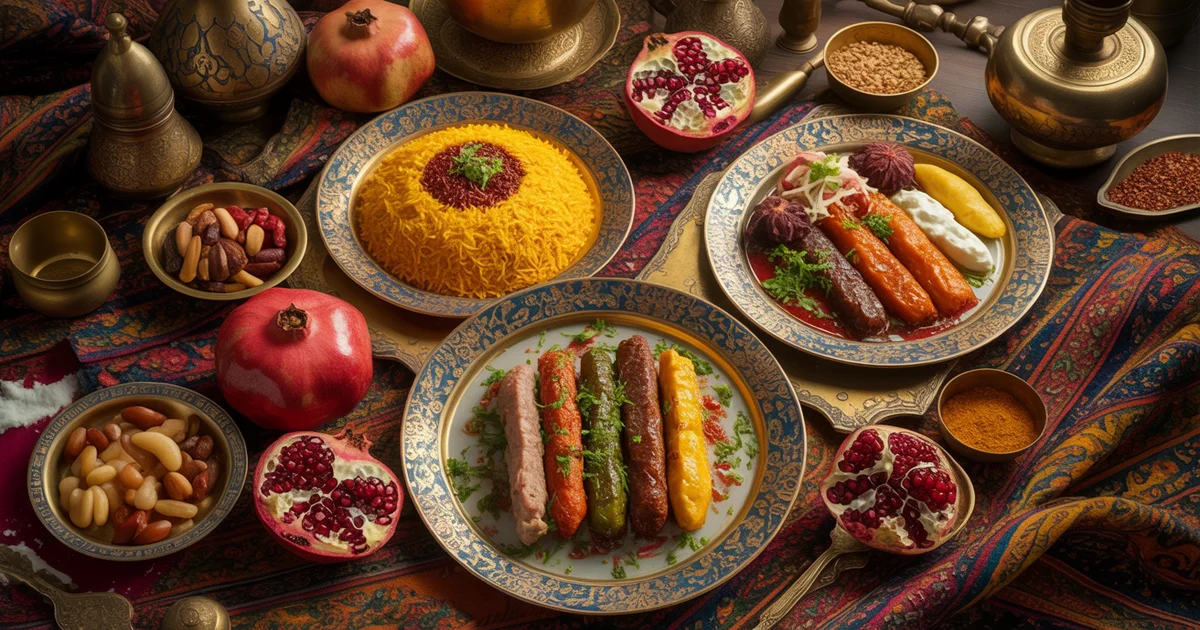
Elegant spread of traditional Persian dishes including golden saffron rice with tahdig, colorful kebabs, pomegranates, and spices in ornate bowls showcasing 2,500 years of culinary heritage

The Ancient Roots of Persian Cuisine: A 2,500-Year Journey from Persia to Your Plate

Introduction: A Culinary Legacy Spanning Millennia

When you sit down to enjoy a plate of fragrant saffron rice, tender kebabs, or creamy hummus at a Mediterranean restaurant, you're experiencing flavors that have been refined over thousands of years. Persian cuisine, one of the world's oldest and most influential culinary traditions, has shaped the way we eat across three continents and continues to captivate food lovers in modern restaurants from Tehran to Los Angeles.

At Carnys Restaurant in Encino, we're proud to serve dishes that connect our guests to this ancient heritage. But the story of Persian food is far more than just recipes—it's a tale of empires, trade routes, cultural exchange, and the enduring power of food to bring people together across time and space.

This journey through culinary history will take you from the royal kitchens of ancient Persia to the vibrant food culture of modern Iran, revealing how this remarkable cuisine influenced everything from Indian curries to European desserts, and why it remains as relevant and delicious today as it was 2,500 years ago.

The Birth of Persian Cuisine: Ancient Persia (550 BCE - 651 CE)

The Achaemenid Empire: Where It All Began

The story of Persian cuisine begins with the Achaemenid Empire (550-330 BCE), founded by Cyrus the Great. This was the world's first superpower, stretching from Egypt to India, and its culinary sophistication matched its political might.

The royal kitchens of Persepolis employed hundreds of cooks, bakers, and food specialists who created elaborate feasts for the Persian kings. Historical records from this period reveal a cuisine already remarkably advanced:

  • Rice cultivation was perfected in the fertile regions of northern Persia, establishing rice as the foundation of Persian meals
  • Saffron, the world's most expensive spice, was cultivated extensively and became synonymous with Persian luxury
  • Kebabs were developed as a practical way to cook meat over open fires during military campaigns
  • Fruit preservation techniques allowed Persians to enjoy pomegranates, dates, and figs year-round
  • Wine production flourished, with Persian wines renowned throughout the ancient world

The Greek historian Herodotus wrote extensively about Persian banquets, describing tables laden with roasted meats, rice dishes, fresh fruits, and sweet pastries—a menu that would be recognizable in any Persian restaurant today.

The Silk Road: Persia as Culinary Crossroads

Persia's geographic position at the heart of the Silk Road transformed it into a culinary melting pot. Spices from India, techniques from China, and ingredients from the Mediterranean all flowed through Persian cities, where local cooks incorporated them into their cuisine.

Key ingredients that entered Persian cooking via the Silk Road:

  • Spices: Cumin, coriander, turmeric, and cardamom from India
  • Citrus: Lemons and bitter oranges from Southeast Asia
  • Nuts: Pistachios and almonds became staples in both savory and sweet dishes
  • Sugar: Refined sugar production techniques from India revolutionized Persian desserts
  • Noodles: Early pasta-like dishes influenced by Chinese noodle-making

This cultural exchange worked both ways. Persian cooking techniques and flavor combinations spread east to India (influencing Mughlai cuisine) and west to the Arab world and eventually Europe.

The Sassanian Era: Refinement and Sophistication

The Sassanian Empire (224-651 CE) represented the golden age of ancient Persian cuisine. This period saw the codification of cooking techniques and the establishment of culinary traditions that persist today.

Innovations from the Sassanian period:

  • Polo (pilaf): The technique of steaming rice with butter and saffron was perfected
  • Tahdig: The beloved crispy rice crust became an intentional culinary achievement
  • Khoresh (stews): Slow-cooked meat and vegetable stews with fruit became signature dishes
  • Nan (bread): Various flatbreads were developed for different occasions
  • Sharbat: Fruit-based drinks that would later inspire European sorbets

The Sassanian royal cookbook, though lost to history, was referenced by later Islamic scholars as containing over 1,000 recipes, demonstrating the sophistication of Persian culinary arts.

The Islamic Golden Age: Fusion and Documentation (651-1258 CE)

The Arab Conquest and Culinary Synthesis

The Arab conquest of Persia in 651 CE could have meant the end of Persian culinary traditions. Instead, it sparked one of history's greatest culinary fusions. Persian cooks entered the service of Arab caliphs, bringing their sophisticated techniques to Baghdad, Damascus, and Cairo.

The result was transformative:

  • Persian cooking methods elevated Arab cuisine to new heights
  • Arabic ingredients and Islamic dietary laws were incorporated into Persian cooking
  • The fusion created what we now call "Middle Eastern cuisine"
  • Persian culinary terminology entered Arabic (and eventually European languages)

Words like "pilaf," "kebab," "sherbet," and "spinach" all have Persian origins, demonstrating the linguistic legacy of this culinary exchange.

The First Cookbooks: Preserving Culinary Knowledge

The Islamic Golden Age saw the creation of the first Persian cookbooks, preserving recipes and techniques that might otherwise have been lost.

Notable culinary texts:

  • "Kitab al-Tabikh" (10th century): One of the earliest Arabic cookbooks, heavily influenced by Persian cuisine
  • "Karnamag-i Artaxshir-i Papakan": A Persian text describing royal feasts and cooking methods
  • Medical texts by Avicenna: Included detailed information about food, nutrition, and cooking

These texts reveal a cuisine already featuring many dishes we recognize today: rice pilafs with meat and dried fruits, yogurt-based dishes, herb-heavy stews, and elaborate pastries soaked in honey and rosewater.

The Spice Trade: Persian Merchants and Global Influence

Persian merchants dominated the spice trade between East and West, and their culinary knowledge traveled with them. Persian trading communities established in India, China, East Africa, and Europe brought their food culture with them, influencing local cuisines wherever they settled.

Persian culinary influence spread to:

  • India: Mughlai cuisine owes much to Persian cooking techniques
  • Central Asia: Uzbek and Tajik cuisines are essentially variations of Persian food
  • Turkey: Ottoman palace cuisine was heavily influenced by Persian cooks
  • The Caucasus: Georgian and Armenian cuisines share many Persian elements
  • East Africa: Swahili cuisine incorporates Persian spices and rice dishes

The Mongol Invasion and Safavid Renaissance (1258-1736)

Destruction and Resilience

The Mongol invasion of 1258 devastated Persian cities and temporarily disrupted culinary traditions. However, Persian cuisine proved remarkably resilient. Within a generation, Persian cooks were serving in Mongol courts, and the invaders had adopted Persian food culture.

The Mongols contributed:

  • Dumplings: Influenced by Chinese cuisine, leading to Persian versions like "joshpare"
  • Grilling techniques: Mongol methods of cooking meat over open fires refined kebab preparation
  • Dairy products: Increased use of yogurt and fermented dairy

The Safavid Dynasty: A Culinary Renaissance

The Safavid Empire (1501-1736) marked a renaissance in Persian arts, including cuisine. The capital, Isfahan, became renowned for its food culture, with elaborate royal banquets and a thriving restaurant scene.

Safavid culinary achievements:

  • Chelo kebab: The combination of plain rice with grilled meat became the national dish
  • Ash (thick soups): Complex soups with herbs, legumes, and noodles were perfected
  • Sweets: Persian confectionery reached new heights with elaborate pastries and candies
  • Tea culture: Tea replaced wine as the beverage of choice (due to Islamic law)
  • Regional specialization: Different cities became known for specific dishes

European travelers to Safavid Persia wrote extensively about the sophistication of Persian cuisine, comparing it favorably to anything available in Europe at the time.

The Qajar Era: Modernization and European Influence (1789-1925)

East Meets West in the Kitchen

The Qajar dynasty opened Persia to increased contact with Europe, leading to new culinary influences while maintaining traditional foundations.

European influences on Persian cuisine:

  • Potatoes and tomatoes: New World vegetables were incorporated into traditional dishes
  • French cooking techniques: Adopted by royal kitchens and wealthy families
  • Cutlery: Forks and knives supplemented traditional eating with bread
  • Baking: European-style ovens enabled new types of bread and pastries
  • Presentation: French plating styles influenced how dishes were served

However, the core of Persian cuisine remained unchanged. Traditional dishes like ghormeh sabzi, fesenjan, and tahchin continued to dominate home cooking and celebrations.

The Birth of Restaurant Culture

The late Qajar period saw the emergence of public restaurants (chelo kababi) in major cities, making Persian cuisine accessible beyond homes and royal courts. These establishments specialized in chelo kebab and became social gathering places.

Modern Persian Cuisine: Tradition Meets Innovation (1925-Present)

The Pahlavi Era: Nationalism and Culinary Pride

The Pahlavi dynasty (1925-1979) promoted Persian cultural nationalism, including pride in traditional cuisine. Cookbooks were published, cooking shows appeared on television, and Persian restaurants opened internationally.

Key developments:

  • Standardization: Traditional recipes were documented and standardized
  • Culinary education: Cooking schools taught Persian cuisine systematically
  • International exposure: Persian restaurants opened in major world cities
  • Ingredient availability: Modern transportation made regional ingredients accessible nationwide

The Islamic Revolution and Diaspora

The 1979 Islamic Revolution led to significant Persian emigration, particularly to the United States, Canada, and Europe. This diaspora brought authentic Persian cuisine to new audiences.

The Persian food diaspora:

  • Los Angeles: Became the center of Persian cuisine outside Iran, with hundreds of restaurants
  • London: Developed a vibrant Persian food scene
  • Toronto: Home to a large Persian community and excellent restaurants
  • Dubai: Emerged as a hub for modern Persian dining

These diaspora communities preserved traditional recipes while adapting to local ingredients and tastes, creating new variations of classic dishes.

Contemporary Persian Cuisine: Innovation and Tradition

Today's Persian cuisine balances respect for tradition with creative innovation. Modern Persian chefs are reinterpreting classic dishes, using contemporary techniques while honoring ancient flavors.

Current trends:

  • Farm-to-table Persian: Emphasizing local, seasonal ingredients
  • Fusion cuisine: Combining Persian flavors with other culinary traditions
  • Vegetarian/vegan adaptations: Creating plant-based versions of traditional dishes
  • Molecular gastronomy: Applying modern techniques to Persian classics
  • Street food elevation: Bringing casual Persian foods to fine dining

Key Dishes and Their Historical Origins

Rice: The Foundation of Persian Cuisine

Historical development:

  • Cultivated in northern Persia for over 2,000 years
  • Steaming technique developed during Sassanian era
  • Tahdig (crispy bottom) became intentional in medieval period
  • Saffron rice reserved for special occasions and royalty

Modern variations:

  • Chelo: Plain steamed rice with butter and saffron
  • Polo: Rice cooked with other ingredients
  • Tahchin: Layered rice cake with yogurt and saffron
  • Shirin polo: Sweet rice with orange peel and nuts

Kebabs: From Military Camps to Fine Dining

Historical origins:

  • Developed by Persian soldiers cooking meat on swords over campfires
  • Refined in royal kitchens during Achaemenid period
  • Different regions developed signature styles
  • Became the national dish during Safavid era

Traditional varieties:

  • Koobideh: Ground meat kebabs (most popular)
  • Barg: Marinated lamb or beef filet
  • Joojeh: Saffron chicken kebabs
  • Shishlik: Lamb chops on the bone

Khoresh: The Art of the Stew

Historical significance:

  • Ancient cooking method dating to pre-Islamic Persia
  • Combines meat, vegetables, fruits, and herbs
  • Slow-cooking technique developed for tough cuts of meat
  • Each region has signature khoresh recipes

Classic examples:

  • Ghormeh sabzi: Herb stew with kidney beans and dried lime
  • Fesenjan: Pomegranate and walnut stew
  • Gheymeh: Split pea stew with dried lime
  • Bademjan: Eggplant and tomato stew

Tahdig: The Beloved Crispy Rice

Cultural importance:

  • Originally an accidental byproduct of rice cooking
  • Became intentional during medieval period
  • Considered the most prized part of the rice
  • Serving tahdig to guests is a sign of respect

Modern variations:

  • Potato tahdig: Sliced potatoes create the crust
  • Bread tahdig: Lavash bread forms the bottom layer
  • Yogurt tahdig: Yogurt and saffron create golden crust
  • Plain rice tahdig: Traditional crispy rice bottom

Persian Cuisine's Global Influence

Impact on Indian Cuisine

The Mughal Empire (1526-1857) was founded by Persian-speaking rulers from Central Asia. They brought Persian culinary traditions to India, creating Mughlai cuisine.

Persian influences on Indian food:

  • Biryani evolved from Persian polo
  • Korma derives from Persian khoresh
  • Kebabs were introduced by Persian cooks
  • Use of dried fruits and nuts in savory dishes
  • Saffron in rice and desserts

Influence on Turkish and Arab Cuisines

Ottoman palace cuisine was heavily influenced by Persian cooks who served in Istanbul. Many dishes considered "Turkish" have Persian origins.

Persian contributions:

  • Pilaf (from polo)
  • Dolma (stuffed vegetables)
  • Baklava (though disputed)
  • Kebab varieties
  • Rosewater and saffron in sweets

Impact on European Cuisine

Persian culinary influence reached Europe through multiple routes: the Crusades, trade with Venice and Genoa, and the Ottoman Empire.

Persian contributions to European food:

  • Sherbet/sorbet: From Persian sharbat
  • Spinach: Persian word "esfenaj" became "spinach"
  • Pilaf: Entered European cuisine via Turkey
  • Saffron use: Persians taught Europeans to use this spice
  • Fruit preserves: Persian techniques influenced European jam-making

The Science Behind Persian Cooking

The Importance of Slow Cooking

Persian cuisine emphasizes slow, gentle cooking that develops complex flavors and tender textures.

Scientific principles:

  • Low heat breaks down collagen: Tough cuts become tender
  • Flavor compounds develop: Maillard reaction creates depth
  • Spices release essential oils: Slow cooking extracts maximum flavor
  • Ingredients meld: Extended cooking time allows flavors to integrate

The Role of Acid in Persian Cooking

Persian cuisine uses various acids to balance rich flavors and tenderize meat.

Common acidic ingredients:

  • Pomegranate molasses: Adds sweet-tart complexity
  • Dried limes: Provide unique citrus flavor
  • Verjuice: Unripe grape juice adds subtle acidity
  • Sumac: Lemony spice for finishing dishes
  • Yogurt: Tenderizes meat and adds tang

The Magic of Saffron

Saffron is the most expensive spice in the world, and Persia (modern Iran) produces 90% of the global supply.

Why saffron is special:

  • Flavor: Subtle, complex taste unlike any other spice
  • Color: Creates beautiful golden hues
  • Aroma: Distinctive, slightly sweet fragrance
  • Chemistry: Contains over 150 volatile compounds
  • Tradition: Used in Persian cooking for 3,000+ years

Proper saffron use:

  • Grind threads with a pinch of sugar
  • Steep in hot water for 10-15 minutes
  • Add the liquid (and threads) to dishes
  • Use sparingly—a little goes a long way

Persian Food Culture and Traditions

Sofreh: The Traditional Dining Spread

Traditional Persian meals are served on a sofreh—a cloth spread on the floor or table with all dishes presented simultaneously.

Elements of a proper sofreh:

  • Rice: The centerpiece, often with tahdig
  • Khoresh: One or more stews
  • Kebabs or other proteins: Grilled or roasted meats
  • Sabzi khordan: Fresh herbs (basil, mint, tarragon, radishes)
  • Mast: Yogurt, plain or with cucumber
  • Torshi: Pickled vegetables
  • Bread: Fresh flatbread
  • Salad: Shirazi salad or other fresh vegetables

Nowruz: The Persian New Year Feast

Nowruz (March 20-21) is the Persian New Year, celebrated for over 3,000 years. The holiday features specific traditional foods.

Nowruz dishes:

  • Sabzi polo ba mahi: Herbed rice with fish
  • Kuku sabzi: Herb frittata
  • Reshteh polo: Rice with noodles
  • Samanu: Sweet wheat pudding
  • Ajil: Mixed nuts and dried fruits

The Haft-Sin table features seven items starting with "S" in Persian, including:

  • Sabzeh (wheat sprouts)
  • Samanu (sweet pudding)
  • Senjed (dried oleaster fruit)
  • Sir (garlic)
  • Sib (apple)
  • Somaq (sumac)
  • Serkeh (vinegar)

Ta'arof: The Art of Persian Hospitality

Ta'arof is the Persian cultural practice of extreme politeness and hospitality, especially around food.

Ta'arof in dining:

  • Hosts insist guests eat more (even when full)
  • Guests initially refuse (even when hungry)
  • This back-and-forth continues several times
  • Eventually, guests accept with gratitude
  • Leaving food on your plate shows you were well-fed

Understanding ta'arof helps appreciate the generosity inherent in Persian food culture.

Persian Cuisine in Modern America

The Los Angeles Persian Food Scene

Los Angeles, particularly the Westwood and Encino areas, has the largest Persian population outside Iran. The city's Persian restaurants range from casual kebab houses to upscale dining establishments.

LA's Persian food landmarks:

  • Westwood: Known as "Tehrangeles," packed with Persian restaurants
  • Encino: Home to upscale Persian dining like Carnys
  • Beverly Hills: High-end Persian restaurants
  • Glendale: Large Persian community with authentic eateries

Adapting to American Tastes

Persian restaurants in America have adapted traditional dishes to suit local preferences while maintaining authenticity.

Common adaptations:

  • Portion sizes: Larger to match American expectations
  • Spice levels: Often milder than in Iran
  • Presentation: More emphasis on plating aesthetics
  • Menu descriptions: Detailed explanations for unfamiliar dishes
  • Fusion options: Combining Persian flavors with American favorites

The New Generation of Persian Chefs

Young Persian-American chefs are reimagining their culinary heritage, creating innovative dishes that honor tradition while embracing creativity.

Modern Persian cuisine trends:

  • Deconstructed classics: Traditional dishes presented in new ways
  • Vegetable-forward: Emphasizing Persian vegetarian traditions
  • Craft cocktails: Persian flavors in mixology
  • Small plates: Mezze-style dining instead of large entrees
  • Sustainable sourcing: Local, organic ingredients

The Health Benefits of Persian Cuisine

A Mediterranean Diet Cousin

Persian cuisine shares many characteristics with the Mediterranean diet, widely considered one of the world's healthiest eating patterns.

Healthy aspects:

  • Abundant vegetables and herbs: High in vitamins and antioxidants
  • Legumes: Excellent protein and fiber sources
  • Whole grains: Brown rice and whole wheat bread
  • Healthy fats: Olive oil and nuts
  • Lean proteins: Grilled meats and fish
  • Minimal processed foods: Emphasis on fresh, whole ingredients

The Power of Persian Herbs

Persian cuisine uses herbs more extensively than perhaps any other culinary tradition. Fresh herbs appear in nearly every meal.

Common herbs and their benefits:

  • Parsley: Rich in vitamins K, C, and A
  • Cilantro: May help remove heavy metals from the body
  • Mint: Aids digestion and freshens breath
  • Dill: Contains antioxidants and may improve bone health
  • Tarragon: May help regulate blood sugar
  • Basil: Anti-inflammatory properties

Fermented Foods and Gut Health

Persian cuisine includes numerous fermented foods that support digestive health.

Traditional fermented foods:

  • Mast (yogurt): Probiotic-rich, aids digestion
  • Torshi (pickles): Fermented vegetables with beneficial bacteria
  • Kashk: Fermented whey product, high in protein
  • Doogh: Yogurt drink with probiotics

Experiencing Persian Cuisine at Carnys

Our Commitment to Authenticity

At Carnys Restaurant in Encino, we honor the 2,500-year tradition of Persian cuisine while making it accessible and exciting for modern diners.

What makes Carnys special:

  • Traditional recipes: Passed down through generations
  • Fresh ingredients: Daily preparation of herbs, bread, and sauces
  • Skilled chefs: Trained in authentic Persian cooking techniques
  • Modern presentation: Beautiful plating that respects tradition
  • Complete experience: Food, drinks, hookah, and entertainment

Signature Dishes with Ancient Roots

Our menu features dishes that connect you directly to Persian culinary history:

Chelo kebab koobideh: Ground beef kebabs with saffron rice and tahdig—the national dish of Iran, perfected over centuries

Ghormeh sabzi: Herb stew with kidney beans and dried lime—a dish that dates back to ancient Persia

Tahdig: Crispy saffron rice crust—the most prized part of Persian rice, fought over at family dinners for millennia

Fesenjan: Pomegranate and walnut stew—a royal dish from the Sassanian era

Shirazi salad: Cucumber, tomato, and onion salad—simple, fresh, and timeless

The Complete Persian Experience

Persian dining is about more than just food—it's a complete sensory and social experience.

At Carnys, we offer:

  • Live music: Traditional and contemporary performances
  • Hookah lounge: Premium flavors in a sophisticated setting
  • Botanical bar: Kava and other wellness drinks
  • Craft cocktails: Persian-inspired mixology
  • Private events: Celebrate Persian-style with family and friends

Conclusion: A Living Culinary Tradition

Persian cuisine is not a relic of the past—it's a living, evolving tradition that continues to captivate food lovers around the world. From the royal kitchens of ancient Persepolis to modern restaurants in Los Angeles, these flavors have endured because they represent something fundamental: the power of food to bring people together, to celebrate life, and to connect us to our shared human heritage.

When you enjoy Persian food, you're not just eating a meal—you're participating in a culinary tradition that has survived empires, invasions, revolutions, and migrations. You're tasting flavors that delighted Persian kings, sustained Silk Road travelers, and comforted immigrants in new lands.

At Carnys, we're honored to be part of this ongoing story, serving dishes that connect our guests in Encino to a culinary heritage spanning 2,500 years. Every plate of saffron rice, every perfectly grilled kebab, every aromatic stew carries with it the wisdom of countless cooks who came before us.

Visit Carnys Restaurant at 16101 Ventura Boulevard in Encino to experience the ancient flavors of Persia in a modern, sophisticated setting. Make your reservation today at carnys.org or call (818) 489-2557.

Share your Persian food experiences with us on Instagram @carnysencino using #CarnysHistory—we love celebrating this incredible culinary heritage with our community!

Topics

Persian cuisinefood historyMediterranean foodEncino restaurantscultural heritageancient cookingSilk Roadculinary traditions

About the Author

Chef Ali RezaeiExecutive Chef & Co-Owner

With over 15 years of Persian and Mediterranean culinary expertise, Chef Ali brings authentic flavors from Tehran to Los Angeles. Trained at Le Cordon Bleu and having worked in Michelin-starred establishments across California, Chef Ali specializes in traditional Persian cooking techniques while adding his own modern twist. His signature dishes include hand-ground koobideh kebabs, slow-cooked ghormeh sabzi, and the restaurant's famous saffron-infused tahdig.

View Full Profile →

Experience Carnys Today

Book your table and discover why Carnys is Encino's favorite Mediterranean lounge for unforgettable dining, hookah, and live entertainment.

You Might Also Enjoy