The Art of Perfect Baklava
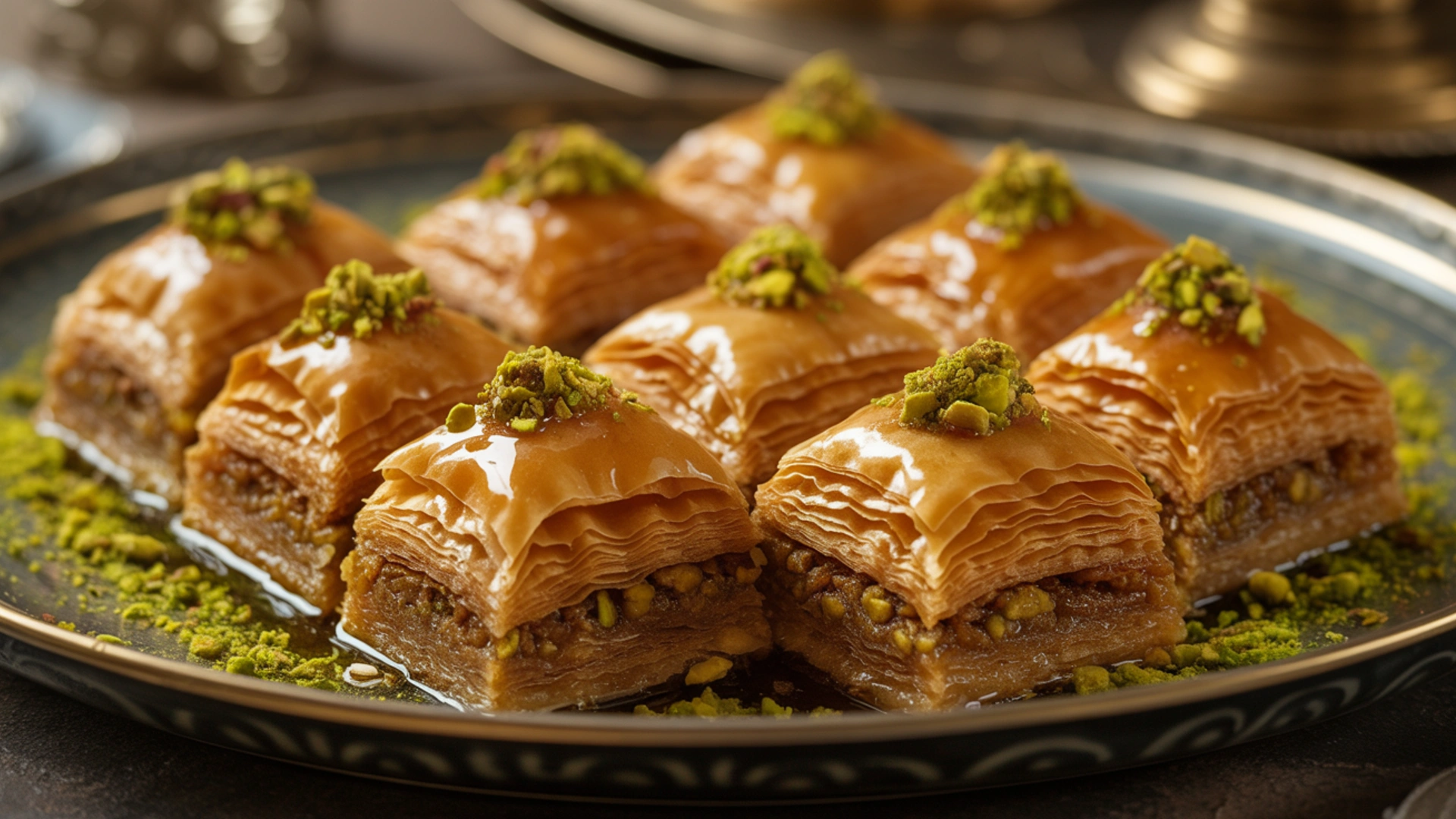
Baklava is the crown jewel of Mediterranean and Middle Eastern desserts - delicate layers of crispy phyllo pastry, aromatic nuts, fragrant spices, and sweet honey syrup. At Carnys Restaurant, our baklava is made fresh daily using Chef Ali's traditional family recipe, resulting in a dessert that's simultaneously crispy, flaky, nutty, and perfectly sweet.
Making baklava might seem intimidating, but with the right technique and patience, you can create restaurant-quality results at home. This comprehensive guide will walk you through every step, from handling delicate phyllo dough to achieving that perfect golden-brown color and getting the syrup-to-pastry ratio just right.
Why This Baklava Recipe Works
After making thousands of pieces at Carnys, we've perfected every detail:
- Butter Technique: Clarified butter (ghee) prevents the phyllo from becoming soggy and provides clean, rich flavor
- Nut Blend: A combination of pistachios, walnuts, and almonds creates complex flavor and texture
- Spice Balance: Cinnamon and cardamom add warmth without overwhelming the nuts
- Cutting Before Baking: Slicing the baklava before baking ensures clean edges and even cooking
- Two-Temperature Baking: Starting hot and finishing cooler creates perfect texture
- Hot-Cold Rule: Pouring cool syrup over hot baklava ensures perfect absorption
Essential Ingredients
For the Pastry
Phyllo Dough (1 pound / 16 oz package): Use fresh phyllo if possible, or frozen (thawed overnight in the refrigerator). Athens brand works well. You'll need about 40-45 sheets.
Unsalted Butter (1.5 lbs / 3 sticks): Use high-quality butter. We'll clarify it for best results.
For the Nut Filling
Pistachios (2 cups): Raw, unsalted. Finely chopped or pulsed in food processor.
Walnuts (1.5 cups): Raw, unsalted. Adds earthiness.
Almonds (1/2 cup): Raw, unsalted. Adds sweetness and crunch.
Sugar (1/2 cup): Granulated white sugar.
Ground Cinnamon (2 teaspoons): For warm spice notes.
Ground Cardamom (1 teaspoon): Aromatic and distinctly Middle Eastern.
Salt (1/4 teaspoon): Enhances all flavors.
For the Honey Syrup
Granulated Sugar (2 cups): Forms the base of the syrup.
Water (1.5 cups): To dissolve the sugar.
Honey (1 cup): Use high-quality honey. Orange blossom or wildflower work beautifully.
Fresh Lemon Juice (3 tablespoons): Balances the sweetness.
Lemon Peel (2-3 strips): For aromatic depth.
Cinnamon Stick (1): Optional but adds fragrance.
Vanilla Extract (1 teaspoon): Or use 1/2 vanilla bean.
Special Equipment Needed
- 9x13 inch metal baking pan (must be metal, not glass)
- Food processor or sharp knife for nuts
- Pastry brush (2 inches wide is ideal)
- Sharp knife for cutting
- Medium saucepan for syrup
- Large bowl for melted butter
Step-by-Step Instructions
Step 1: Clarify the Butter
Place 1.5 lbs of butter in a medium saucepan over low heat. Melt slowly without stirring. The butter will separate into three layers: foam on top, clear golden liquid in the middle, and milk solids at the bottom.
Skim off and discard the foam. Carefully pour the clear golden liquid (this is your clarified butter/ghee) into a bowl, leaving the milk solids behind in the pan. You should have about 1.5 cups of clarified butter.
Chef Ali's Tip: "Clarifying the butter is optional but highly recommended. It prevents the phyllo from getting soggy and eliminates that 'heavy' butter taste. Your baklava will be lighter and crisper."
Step 2: Prepare the Nut Filling
In a food processor, pulse the pistachios, walnuts, and almonds until finely chopped - about the size of coarse breadcrumbs. You want texture, not nut butter, so pulse carefully.
Transfer to a bowl and mix in the sugar, cinnamon, cardamom, and salt. Stir until evenly combined. Set aside.
Pro Tip: Reserve 1/4 cup of the finest pistachio pieces to sprinkle on top before baking - this makes a beautiful presentation.
Step 3: Prepare Your Workspace
Brush your 9x13 inch baking pan generously with clarified butter. Have your phyllo dough, melted butter, pastry brush, and nut mixture all within easy reach.
Unroll the phyllo and cover it immediately with plastic wrap, then place a slightly damp (not wet!) kitchen towel on top. This prevents the delicate sheets from drying out and cracking.
Important: Work quickly but calmly. If a phyllo sheet tears, don't worry - just continue. The layers will disguise any imperfections.
Step 4: Layer the Phyllo (Bottom Layer)
Place one sheet of phyllo in the buttered pan. It should cover the entire bottom - if it overhangs slightly, that's fine. Brush the entire sheet with melted butter using light, sweeping strokes.
Add another phyllo sheet on top and brush with butter. Repeat this process for 8-10 sheets total (about 1/4 of your phyllo package). Each sheet should be brushed with butter.
Chef Ali's Technique: "Don't over-butter. A light coating is all you need. Too much butter makes the baklava greasy. Think of painting, not drowning."
Step 5: Add First Nut Layer
Sprinkle 1/3 of your nut mixture evenly over the phyllo base. Spread it to the edges using your hands or a spatula.
Step 6: Middle Phyllo Layers
Add 5-6 more phyllo sheets, brushing each one with butter. Then add another 1/3 of the nut mixture.
Repeat: 5-6 phyllo sheets (buttered), then the final 1/3 of nuts.
Step 7: Top Phyllo Layer
For the top, use 8-10 phyllo sheets, brushing each with butter. For the final top sheet, brush it generously with butter and sprinkle with those reserved fine pistachios if using.
Press down gently on the entire pan with your hands to compress the layers slightly.
Step 8: Cut Before Baking (Critical!)
Using a very sharp knife, cut the baklava into diamonds or squares. The traditional method is diamonds:
- Cut straight lines lengthwise, about 1.5 inches apart (you'll get 8-9 lines)
- Cut diagonal lines from corner to corner to create diamond shapes
Cut all the way through to the bottom of the pan. Don't be timid - clean cuts now mean perfect pieces later.
Pro Tip: Wipe your knife with a damp cloth between cuts for the cleanest edges.
Step 9: Bake
Preheat oven to 350°F (175°C). Bake the baklava for 30 minutes.
After 30 minutes, reduce temperature to 300°F (150°C) and continue baking for another 30-40 minutes, until the baklava is golden brown and crispy.
The phyllo should be evenly golden - not pale (undercooked) and not dark brown (overcooked). Total baking time: 60-70 minutes.
Step 10: Make the Honey Syrup
While the baklava is baking, make your syrup. Combine sugar and water in a medium saucepan. Add lemon peel and cinnamon stick if using.
Bring to a boil over medium-high heat, stirring until sugar dissolves. Once boiling, stop stirring and let it boil for 10 minutes.
Reduce heat to medium-low. Stir in honey, lemon juice, and vanilla extract. Simmer for another 5 minutes.
Remove from heat, discard lemon peel and cinnamon stick, and let the syrup cool to room temperature. This is essential - the syrup must be cool when you pour it over hot baklava.
Step 11: Add the Syrup (The Most Important Step!)
When the baklava comes out of the oven, it should be hot. Immediately pour the cooled syrup evenly over the entire pan. You'll hear it sizzle - that's perfect!
Use all the syrup. Spoon it over any spots that look dry. The hot baklava will absorb the syrup like a sponge.
The Hot-Cold Rule: Hot pastry + cold syrup = perfect absorption. If both are hot or both are cold, you'll get soggy or dry baklava.
Step 12: Rest and Serve
Let the baklava rest uncovered at room temperature for at least 4 hours, preferably overnight. This allows the syrup to fully absorb and the layers to set.
Don't cover it immediately - you want the top to stay crisp. After it's fully cooled and set, you can cover it loosely with foil.
Common Mistakes and How to Avoid Them
1. Soggy Baklava
Usually caused by: Using regular butter instead of clarified, adding syrup while both pastry and syrup are hot, or using too much butter. Solution: Clarify your butter and follow the hot-cold rule.
2. Dry Baklava
Caused by not using enough syrup or waiting too long to add it. The pastry must be hot when the syrup goes on for proper absorption.
3. Phyllo Tearing
Keep phyllo covered with plastic wrap and a damp towel. Work quickly but don't rush. Torn sheets are fine - they'll be invisible in the final product.
4. Uneven Baking
Rotate your pan halfway through baking. Make sure your oven is properly calibrated.
5. Can't Cut Clean Pieces
This happens when you cut after baking. Always cut before baking for clean edges. Also ensure you cut all the way to the bottom.
Chef Ali's Pro Tips
Make Ahead: Baklava actually improves after 1-2 days as the flavors meld. Make it up to 3 days in advance.
Nut Variations: Try all pistachios for a vibrant green color, or all walnuts for a more traditional Greek style. Hazelnuts are also excellent.
Flavor Variations: Add 1 tablespoon of orange blossom water or rose water to the syrup for a floral note.
Storing: Store covered at room temperature for up to 2 weeks. Don't refrigerate - it makes the phyllo soggy.
Freezing: Freeze un-syruped baked baklava for up to 3 months. Thaw, then add hot syrup.
Perfect Portions: For parties, cut into smaller pieces (1-inch squares). For dessert servings, cut larger (2-inch diamonds).
Serving Suggestions
Traditional Service
Serve at room temperature with strong Turkish or Arabic coffee. The bitter coffee perfectly balances the sweet baklava.
Modern Presentation
Serve with a small scoop of vanilla ice cream or a dollop of mascarpone whipped cream. Drizzle with extra honey.
For Gifting
Baklava makes an excellent gift. Package pieces in pretty boxes or tins lined with parchment paper. They'll keep for 2 weeks at room temperature.
Regional Variations
Greek Baklava: Uses all walnuts, more cinnamon, and often adds ground cloves.
Turkish Baklava: All pistachios, shaped into cigars or triangles.
Lebanese Baklava: Orange blossom water in the syrup, often shaped into roses.
Armenian Baklava: Adds cardamom and sometimes all-butter, no clarifying.
Storage
Room Temperature: Keep covered loosely with foil for up to 2 weeks. Don't seal tightly or refrigerate.
Freezing: Wrap individual pieces in plastic wrap, then place in freezer bags. Freeze for up to 3 months. Thaw at room temperature.
Frequently Asked Questions
Can I use storebought phyllo?
Yes! In fact, most bakeries use commercial phyllo. Athens brand is excellent. Just make sure it's fully thawed before using.
My phyllo is cracking and dry. What do I do?
This means it dried out. Keep unused sheets covered with plastic wrap and a damp towel. If some sheets crack, use them in middle layers where they won't be visible.
Can I make baklava without nuts?
Nuts are essential to baklava. However, you can make "lady fingers" (similar dessert) using semolina and coconut instead.
Why is my baklava not crispy?
Either too much butter was used, the butter wasn't clarified, or both the pastry and syrup were hot when combined. Make sure to follow the hot-cold rule.
How do I know when it's done baking?
The phyllo should be evenly golden brown all over, including the edges. If the top is browning too fast, cover loosely with foil and continue baking.
Can I halve this recipe?
Yes, use an 8x8 or 9x9 pan. Halve all ingredients. Baking time will be slightly less (about 50-60 minutes total).
Nutrition Information
Per piece (1 diamond, makes 40 pieces):
- Calories: 210
- Fat: 12g (6g saturated)
- Carbohydrates: 24g
- Sugars: 16g
- Protein: 3g
- Fiber: 1g
Note: Baklava is a rich dessert meant to be savored in small portions.
The Carnys Experience
At Carnys Restaurant in Encino, our baklava is made fresh every morning using this exact recipe. We serve it as the perfect ending to a Mediterranean meal, paired with strong Turkish coffee or our special dessert wines.
Visit us at 16101 Ventura Boulevard to experience Chef Ali's baklava, or use this recipe to bring the flavors of the Mediterranean into your home. Once you taste homemade baklava, you'll never go back to store-bought!
Share your baklava creations with us @carnysencino using #CarnysBaklava - we love seeing your beautiful desserts!
Topics
About the Author
Chef Ali Rezaei • Executive Chef & Co-Owner
With over 15 years of Persian and Mediterranean culinary expertise, Chef Ali brings authentic flavors from Tehran to Los Angeles. Trained at Le Cordon Bleu and having worked in Michelin-starred establishments across California, Chef Ali specializes in traditional Persian cooking techniques while adding his own modern twist. His signature dishes include hand-ground koobideh kebabs, slow-cooked ghormeh sabzi, and the restaurant's famous saffron-infused tahdig.
View Full Profile →Experience Carnys Today
Book your table and discover why Carnys is Encino's favorite Mediterranean lounge for unforgettable dining, hookah, and live entertainment.